
Auto Plan

Predict the Future

Before you even arrive on site…

Create Comprehensive Project Plans

Planning from afar usually means missing something that matters. Auto Plan uses historical data, operational knowledge, and proven best practices to account for the environment, assets, and team before the job begins. You describe the work, AI builds the plan, and you show up ready to move.

Expect the Unexpected

Most delays are not surprises, they are patterns that went unseen. Auto Plan analyzes previous jobs and operational signals to uncover where work typically breaks down. Instead of reacting on site, you arrive with risks identified and responses already planned.

Align Expectations Across Every Role, at Every Step

When expectations differ, execution suffers. Auto Plan eliminates that friction by establishing one clear, shared source of truth for the job. Responsibilities are defined, work is synchronized, and teams move forward together.
dashboard-connection

A Crystal Ball in Your Office

A Crystal Ball in Your Office

A Crystal Ball in Your Office

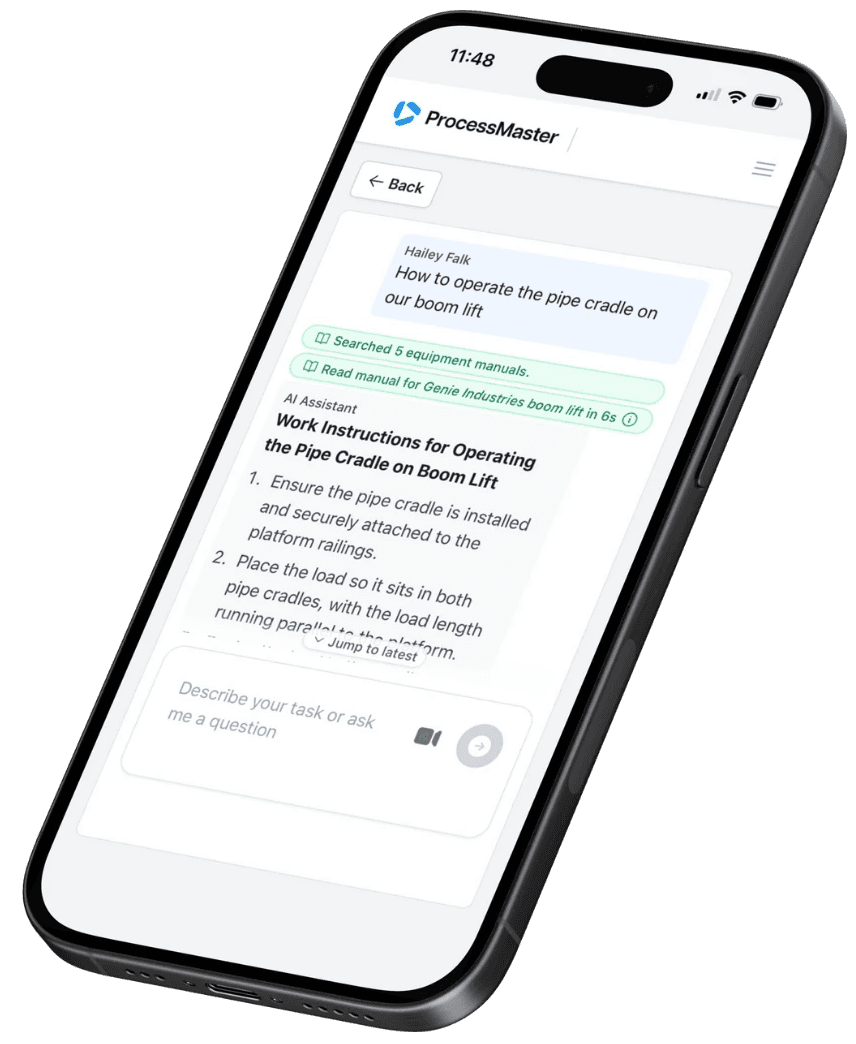
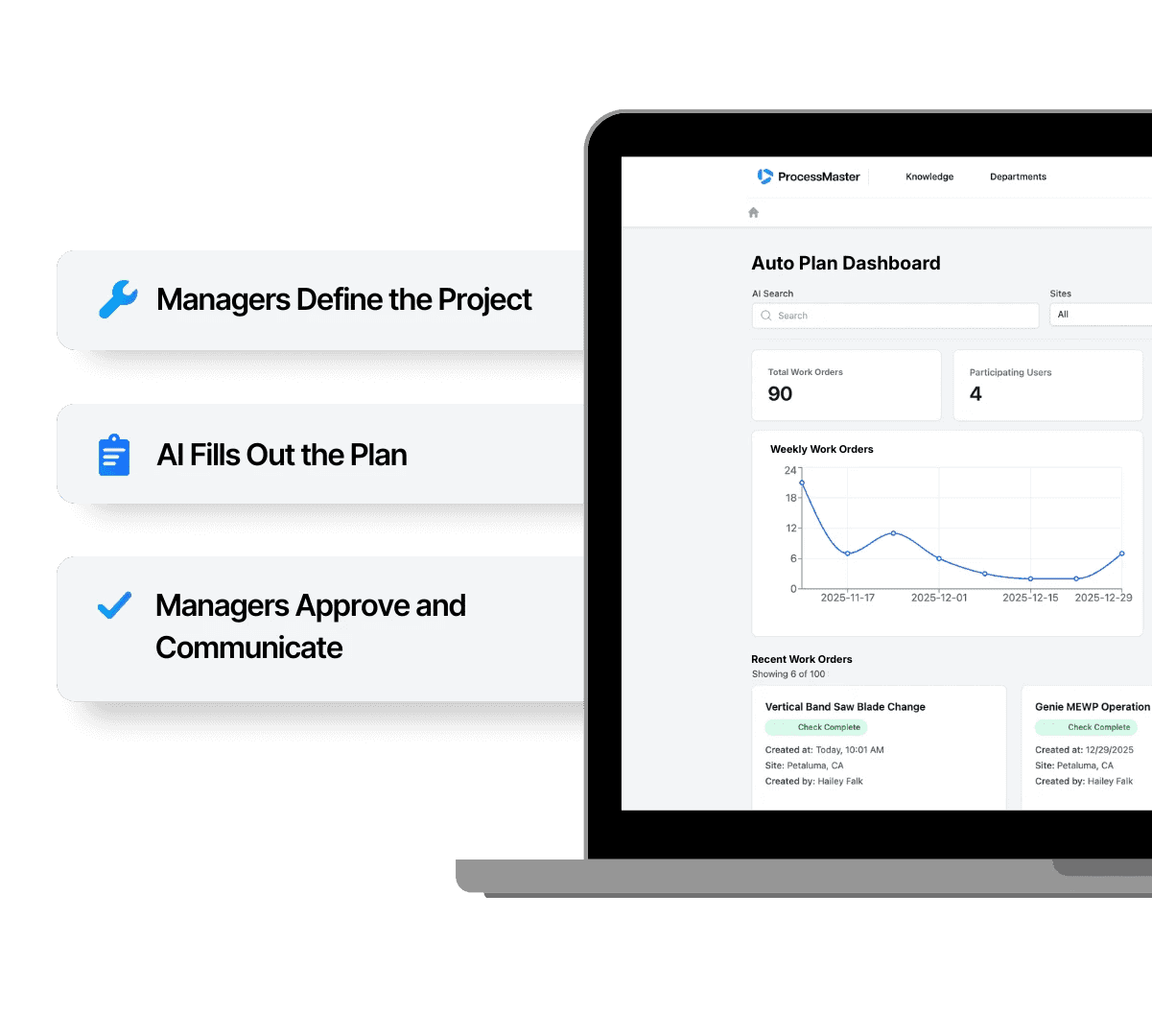
Operations Managers start by describing the job and sharing whatever information they already have, such as scope details, photos, documents, or historical context. Teams can arrive on site or at their line with a clear plan that reflects real world conditions, known risks, and role-specific expectations instead of figuring things out on the job. Behind the scenes, AI connects past jobs, operational knowledge, and best practices to model how the work is likely to unfold, identify potential disruptions, and build a plan that is ready before anyone steps into the field.

Operations Managers start by describing the job and sharing whatever information they already have, such as scope details, photos, documents, or historical context. Teams can arrive on site or at their line with a clear plan that reflects real world conditions, known risks, and role-specific expectations instead of figuring things out on the job. Behind the scenes, AI connects past jobs, operational knowledge, and best practices to model how the work is likely to unfold, identify potential disruptions, and build a plan that is ready before anyone steps into the field.

Operations Managers start by describing the job and sharing whatever information they already have, such as scope details, photos, documents, or historical context. Teams can arrive on site or at their line with a clear plan that reflects real world conditions, known risks, and role-specific expectations instead of figuring things out on the job. Behind the scenes, AI connects past jobs, operational knowledge, and best practices to model how the work is likely to unfold, identify potential disruptions, and build a plan that is ready before anyone steps into the field.